Showing posts with label Verdi. Show all posts

Tuesday, 17 December 2013

Don't get me started on...


...people who include pets as "signatories" on their Christmas cards. The Season of Goodwill is stressed and strained enough as it is without extra provocation.

The ox and ass know their place in a Nativity scene, but a pony in Verdi's Falstaff? Well, at the outset of Act III, one puts in an appearance in Robert Carsen's syndicated production. It was relayed from The Met. to us amongst others - not that many, surprisingly - in our local Cineworld on Saturday evening. A riotously enjoyable evening it was too, discounting a few excesses (in addition to the pony): these so easily take attention away from a score that describes the action more than sufficiently. So, the wonderful orchestral accompaniment to "Mondo ladro" etc. was lost by my efforts to discern where Falstaff had ended up when he should have been "seated on a bench beside the door of the Garter Inn" (according to the stage directions).

As suggested in the interval discussion, Falstaff is a giant standing on the shoulders of others - Figaro and Meistersinger, but also Rosenkavalier. And something of the humanity, the stillness of a very great work needs bringing out, that was just a little lacking on Saturday. Nevertheless, for the first time in a while at these relays, I felt an urge to clap at the end.

This made me reflect again on a weird genre: the audience in New York is enjoying a live performance, but though we are watching it real-time, we might as well not be. It could be the Oscars on telly at home. I guess that's why I prefer the relative anonymity of Screen 4 (possibly Cineworld's largest auditorium) to the chi-chi of the more exclusive Screening Rooms downstairs. There you are in a full house, waited on with wine and nibbles while you wallow in leather seating alongside other regulars.

I discussed this over wine and (somewhat more than) nibbles with Robert Padgett, Chairman of the Cheltenham Opera Society, at lunchtime on Sunday. What was the effect of all these relays, I wondered, upon the audience for the actual performances (in New York, London, Glyndebourne, Stratford etc.); and upon the audience for less prestigious productions in the same towns/cities as had the relays?

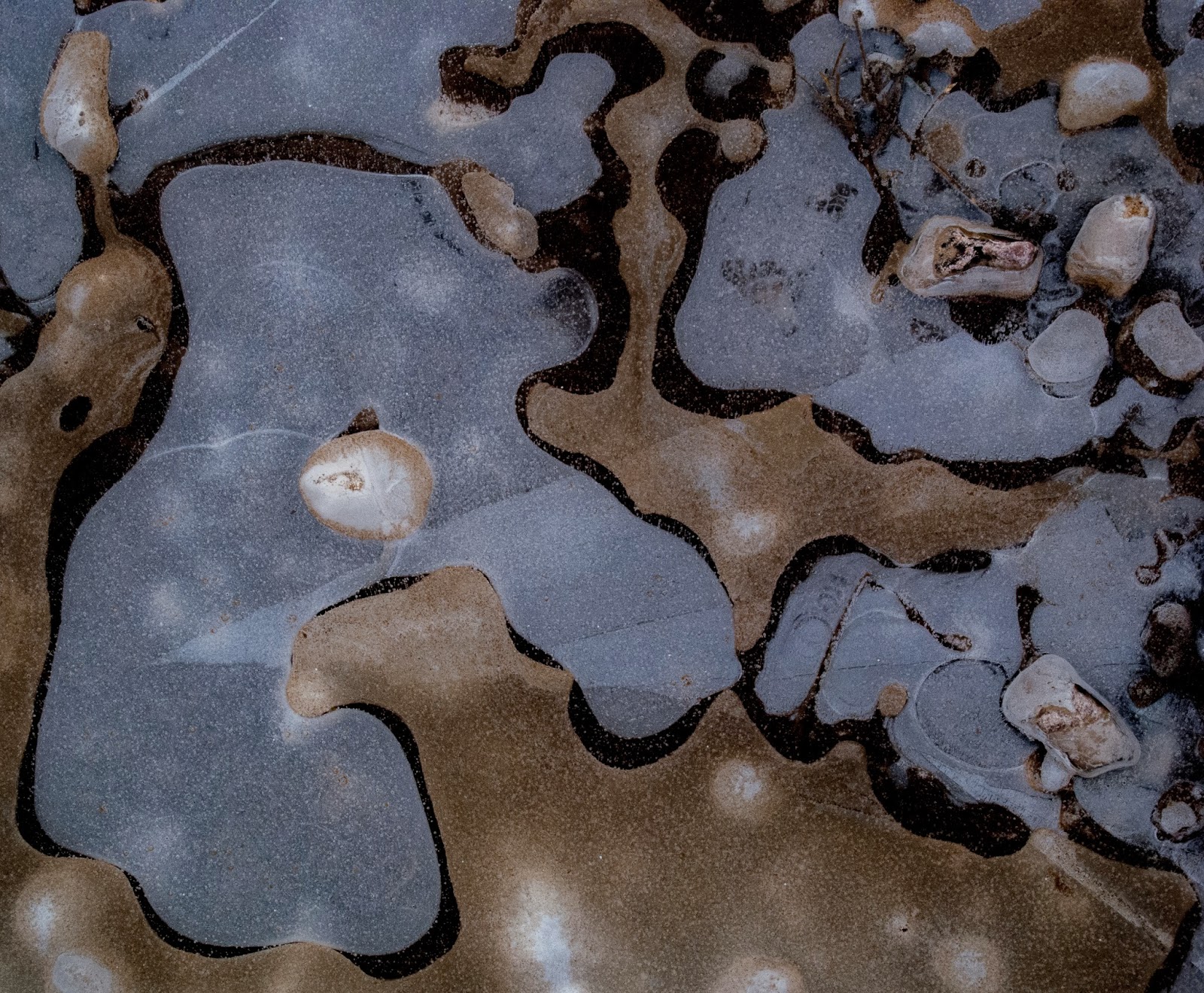
Not much photography lately: so here instead is an image taken when out walking on an icy lane this time last year - it was a good few degrees colder then.


Monday, 4 November 2013

Another chapter closed


It's a relief when you go to an opera you don't know and realise at the final curtain that you need never see it again. Not that we didn't enjoy Les Vêpres Siciliennes, relayed from Covent Garden this evening. It has some good tunes, and opera doesn't come much grander. Though the programme strangely didn't mention his name, the excellent director Stefan Herheim spared no thought, and his paymasters no expense: the updating from 13th to mid-19th Century was an ingenious solution to what's pretty much an old war horse. It could be dire done straight.

During the intervals we were treated to tweets from cinema audiences around the world: someone from Ulster "wished we were there at the Royal Opera House": Caroline and I begged to differ. We felt far better off sitting in acres of space in our local Cineworld, enjoying our picnic topped off with a Ben and Jerry's ice cream.

And I reached the final chapter of "Still in the Game" last night. Charlotte had lent me her copy of Antony Hornyold's book when we met him at lunch with them last month. I much enjoyed its mixture of autobiography, history, adventure and reflection. Antony's own photographs are accompanied by good maps and some judiciously chosen archive material. Biggles was an earlier generation, but there are echoes in this self-portrayal of a brave and modest man, still very much with us. When's the next one coming out, Antony?

Wednesday, 29 May 2013

Simon Boccenegra


Adam and I share a love of opera: together we saw Tales of Hoffmann one very hot night in London, and then Faust in Budapest on my first visit. On that occasion, the opera house was closed, so this evening, when he took me to see Simon Boccenegra, I was there for the first time. Most magnificent the Hungarian State Opera is too, more on the scale of the Staatsoper in Vienna than Covent Garden. In the stalls, the seats are wooden, so rather bum-numbing, but the legroom is fine. Once again, the night was warm.

S.B. is not my favourite opera, but it has its rousing moments. The production didn't excite me, and indeed had puzzling aspects, but the Fiesco (Giacomo Prestia) sang well. Judit's cousin leads the orchestra, and got us our tickets, along with a free programme and drinks in the plush Green Room. (No alcohol on sale there.)

Earlier, Adam had taken me on a grand tour of Buda (the National Gallery), and across the Chain Bridge to Pest - the Greham Hotel (with its Dale Chihuly chandelier) and St Stephen's Basilica. Returning by tram, we walked quickly past the street sellers - mostly more pressing than these I photographed.

Tuesday, 17 April 2012

"Rigoletto"


Our dynamic New Zealander handyman, Arden, descended upon us early this morning, to dismantle a built-in cupboard. In the clearing out process, I came across some programmes dating back to the year I started living in London. I had a new love in my life then, opera, and the above evidences my first visit to see Verdi's Rigoletto. That was its 357th performance at the Royal Opera House, with Edward Downes at the helm of Zeffirelli's sumptuous production. American baritone, Cornell MacNeil sang the jester, with the lovely Reri Grist as his daughter. Though I can't give any critical analysis of that performance, the opera is one I have come to cherish through a number of subsequent listenings. I have a 1960 version on CD, with Bastianini, Scotto - and Alfredo Kraus: the only time I saw him was as the Duke at Covent Garden in February 1974: I remember standing at the back of the Stalls Circle for what was a sensational individual performance. Notwithstanding this warm memory, I have to rate as my top choice the 1956 Tullio Serafin recording, which I also have, with Gobbi, Callas and di Stefano.

Naturally, therefore, I was eager to catch the relay from the Opera House of its 497th performance tonight, sitting in the comfort of Cheltenham Cineworld. Nor I was I disappointed although, dynamically, John Eliot Gardiner's rendition nowhere approaches Serafin's, save possibly in the great quartet. This was - as ever for me - the highlight. David McVicar's production leaves little to the imagination. (Do we need full frontal male nudity? And how anyway do you carry out a rape without an erection?) Dimitri Platanias looks terrific in the name part, acts and sings superbly: his only disadvantage is being encumbered with a pair of distracting Lekis - and not being Tito Gobbi. Ekaterina Siurina's Gilda was likewise a great joy to hear; and Christine Rice's portrayal of the Act III mezzo role was as outstanding as we've come to expect from her.