Showing posts with label Cineworld. Show all posts

Sunday, 19 October 2014

Two men, one bitch


John Crace would be hard put to find a "Digested read, digested" phrase for the Marriage of Figaro, the opera: my title to this post, for instance, only partially unlocks the plot. And in Richard Eyre's production at the Met, relayed last night to our Cineworld, Marlis Petersen's Susanna is anything but bitchy. In fact I thought all the women excellent, and the set and costume designs (stand up Rob Howell) were a dream. What a unique masterpiece Mozart gave us!

Wednesday, 3 September 2014

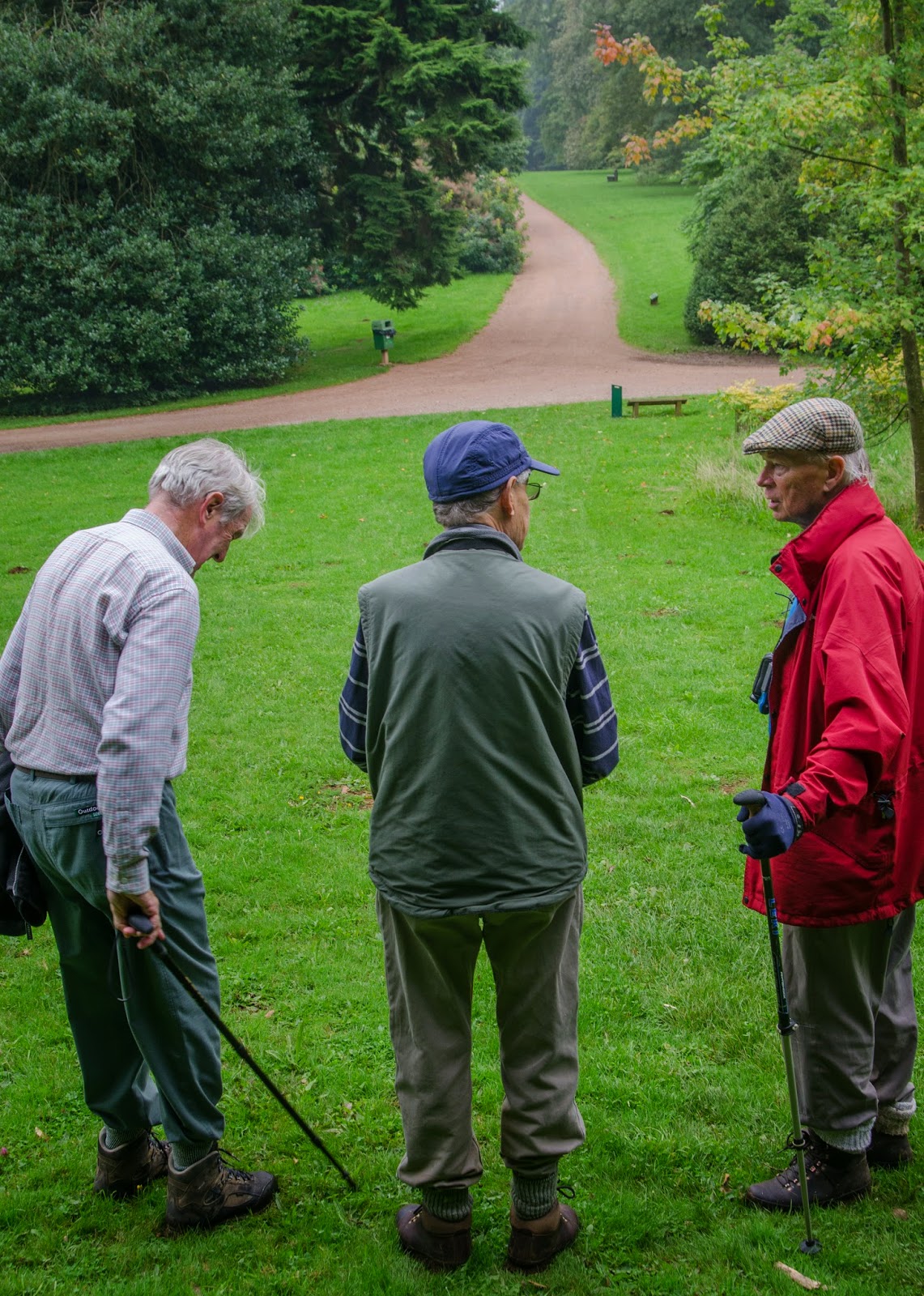
Four Gentlemen of Leisure


A quartet of Wednesday walkers started out from Leighterton this morning, and made for the Silkwood at Westonbirt, not a walk I knew. Though the sun didn't come out till later, it was very warm, and the scenery varied. Rather too many stiles for my liking.

I've come home this evening from an RSC live relay (to our Cineworld). Another first for me - Two Gentlemen of Verona. Though it's early Shakespeare, with a far from plausible plot, there are still plenty of good lines, and they came across well in Simon Godwin's production. Michael Bruce's music played a big part in creating a playful atmosphere, though no setting of the celebrated song is ever going to be a match for Schubert's An Sylvia.

Thursday, 19 June 2014

Fracking in the Cotswolds


This was the title of a presentation given by Dr. Jonathan Whittaker today to the Gloucestershire Churches Environmental Justice Network. A good number of us crowded into the so-called Jerusalem Room over College Green from Gloucester Cathedral to hear it. "I'm a dentist," Jonathan began, "so I know a little about drilling..." He was modest: fracking is clearly a subject he's studied carefully, and puts well into context.

Explaining why the Government is so keen to promote it, he uses the analogy of tobacco. The tax revenues from both shale gas exploration and cigarette sales are a pot of gold too tempting for Chancellors to resist - but the cost of encouraging fracking may outweigh its income stream in the long term, just as the cost of treating lung cancer patients puts the tax from tobacco sales into perspective.

Fracking is, Jonathan concludes, less likely a bridge to the future - more a gangplank. What if - instead - as much were spent on developing (for instance) the Anaconda wave energy converter, pumped hydro energy storage and peak demand control as is scheduled for HS2?

Jerusalem was already on my mind from last night, as we watched Henry IV Part 2, relayed from Stratford-upon-Avon. The king's death in the Jerusalem Chamber takes place off stage, but on stage there's plenty of fine business in Greg Doran's excellent production, in which Oliver Ford Davies as Shallow if anything outperforms Antony Sher as Falstaff. What a play!

Thursday, 22 May 2014

The Froome Valley


Yesterday, four of us met up at the Daneway Inn for a walk up to Pinbury Park and back via Dorvel Wood. We saw a trip of goats (all black), a rag of colts (destined to be polo ponies, and waiting for the vet to geld them), and a bevy - there must have been a dozen or more - of roe deer, showing us a way into the woods. There the wild garlic reminded me of the bärlauch on so many menus in Germany and Switzerland last month. (My photograph shows the sign I followed when looking for a bed in Märstetten - and very comfortable it was too.)

The new service station on the North-bound M5 near Gloucester is "Hofladen" (farm shop) writ large: we stopped there for (very expensive) petrol en route home from supper with Edmund in Bristol last night. On the one hand, I can't conceive of any reason beneficial to the environment why more commercial outlets should be needed: on the other, if you are going to have motorway service stations, they might as well be on this (the Westmorland Tebay) model.

Today, I've been in amongst my not-so-wild garlic. (Only the weeds have gone wild, but they pull out readily after the rain.) And this evening, we went to Cineworld (along with half the rest of Cheltenham, it seemed) for the National Theatre's The Curious Incident of the Dog in the Night-Time. This, with its dizzy-making camera angles and Pirandellian roots, hugely benefited from the big screen relay. Fabulous drama!

Friday, 16 May 2014

The Windrush


Four of us, having parked under the vast Sycamore tree at Cold Aston this morning, walked to Aston Farm and then up the South bank of the Windrush, from where I photographed this peaceful scene. Another idyllic Spring day!

It follows two evenings out with Shakespeare. As You Like It performed by the Tobacco Factory at Cheltenham's Everyman Theatre last night, and Henry IV Part 1 relayed from Stratford to our Cineworld on Wednesday. In his magnum opus, Harold Bloom writes, "Shakespeare's invention of the human, already triumphant through his creation of Falstaff, acquired a new dimension with Rosalind... the most admirable personage in the whole of Shakespeare,... the most remarkable and persuasive representation of a woman in all of Western literature." What a privilege to see two excellent productions of these masterpieces on consecutive days!

Tuesday, 25 March 2014

The Annunciation


This evening, we have been to our local Cineworld to see The Grand Budapest Hotel. It's clever, with each frame beautifully composed, but the same goes for many a TV advertisement: Wes Anderson's film is like one long such advertisement, and ultimately it palls.

From the ridiculous to the sublime, I photographed this Virgin at the Annunciation (today's feast) in the sacristy of Lescar Cathedral last April. The separate figure of the Archangel Gabriel is a few feet to the left, with an unsightly notice in between.

On my previous visit, in the same month four years earlier, I had photographed the very wonderful ensemble (see below - then there was nothing on the wall in the middle), but the figure of Mary comes out better in the more recent image I feel.


Tuesday, 4 March 2014

"City of kites and crows"


Shakespeare's Coriolanus is not a bundle of laughs. But it does have one or two memorable speeches and phrases. An earlier NT live performance relay - we were turned away in January when the connection to Cheltenham failed - was encored yesterday afternoon.

My companions left at the interval: I admit to being tempted to follow, but on balance I'm glad to have sat it out, bloody though the hero's (literal) comeuppance was.

Josie Rourke's Almeida production fills that small stage with action rather than props. It's a pocket battleship version, and you miss the scale of unfolding events: I have a dim memory of Peter Hall's epic 1959 rendering at Stratford, with Olivier in the name part and Edith Evans, Mary Ure and Vanessa Redgrave as the three main women (Diana Rigg, Ian Holm and Albert Finney in minor parts). Tom Hiddlestone at 33 looks and may inevitably seem lightweight when compared to Olivier at 52, but his coiled energy, if not his mainly soft-spoken poetry, makes for a compelling performance.

Meanwhile, our garden boasts neither kites or crows, but a robin settled happily on my spinach basket this morning.

Thursday, 27 February 2014

"War Horse"


After so many had said how wonderful the play was, it's perhaps hardly surprising I felt a bit disappointed by War Horse. It was relayed from its London stage this evening to our Cineworld, where 750 of us filled four of the "screens" to watch it in reverent silence: in contrast, the live audience stood at the end and hooted their approval.

It's worth going to admire the amazing puppetry, and not least to see the goose. The story itself begins well enough, but seems to lose focus as soon as World War I breaks out. Perhaps it would be more enthralling in the actual theatre auditorium, but I wasn't much involved during the French/German scenes.

The dialogue and the songs lacked the punch and bitterness of Oh What a Lovely War: you may say there's no comparison, but for me the memory of that evening at Theatre Royal, Stratford East nearly 50 years ago, is ineradicable. Apart from the puppets, I doubt I'll recall much of War Horse in five weeks time.

By when the property opposite (War House?) will still be shrouded in its onesie. The grass verge in front of it has already disappeared beneath the wheels of attendant lorries.

Sunday, 9 February 2014

Rusalka


Dvořák's music always casts a spell over me, and whenever I've heard bits of Rusalka on the wireless, I've wanted to see it staged. But last night's live relay from the Met. - we went to the Roses Theatre in Tewkesbury to catch it - turned out to be disappointing.

For one thing, the transmission was badly affected by the awful weather. The link remained more or less unbroken, despite the wind and rain, but was subject to pretty continuous bursts of hiccoughs, a bit like a silent film. For another, the Roses seemed less comfortable as a venue than I'd remembered: I squirmed a lot in my seat and shivered in the cold atmosphere. (At least they manage the house lighting better than at Cineworld, and parking is easy.)

The real problem was the opera, which seemed to drag interminably. People dislike Wagner for being long-winded: Rusalka seemed far worse. Despite some excellent singing and a beautiful stage picture throughout, we could have done with it being cut by half - and especially without the scene featuring assorted animals, some looking as if they were marshalling planes from runway to terminal. All in all I shall not be rushing back.

Wagner kept returning to mind: there are obvious similarities between the opening scenes of Rusalka and of Das Rheingold, each moral tales in their own way. Dvořák's strong Christian faith contrasts however with Wagner's idiosyncratic religious views: you can't imagine Brünnhilde signing off on Siegfried as Rusalka does with her prince: "May God have mercy on his soul."

Earlier, we had driven to Great Rissington to meet friends from Oxfordshire. I thought we would be safe walking high on the side of the valley of the River Dickler, but the rain has ceased to sink in even up there.

Wednesday, 29 January 2014

Savage culture


The sign "Savage culture" hangs above a shop in that extraordinary Cantabrian town Santillana del Mar: it's an oxymoron that came to mind during Inside Llewyn Davis this evening, and in reflecting about last night's film too.

The latest Coen Brothers offering, beautifully set in the early '60s, pivots round a young, gentle-till-provoked hobo, a talented New York guitarist and song-writer. Through many difficult and some violent relationships, not least with ginger cats, we watch his life slowly disintegrating, as his lyrical ballads are ruthlessly dismissed as noncommercial. Ulysses turns out to be the name of the no. 1 cat, but Llewyn Davis' Odyssey has no such happy ending. Why did he fail when Bob Dylan succeeded? we ask. Coming away, Caroline and I agreed: there but for the grace of God goes one of ours (similarly hirsute and entangled with cats).

Inside Llewyn Davis is an extremely funny, very sad film, a description applying equally to Dans la maison, François Ozon's brilliant second-to-last feature from 2012: our Film Society showed it last night. This centres on another male character encumbered by a busted flush of a father, but this time manipulating those around him, as opposed to being manipulated. Claude, aged 16, wreaks havoc within his bourgeois community, sending his literary Maestro mad as fantasy conflicts with reality. Culture, once again a double-edged sword.

I took the photograph in Elmley Castle. Four of us reached there starting from Ashton-under-Hill, happily a dry walk this morning, with fine, long views: the rain has come back since.  It was mostly firm underfoot across Bredon Hill, but horribly muddy on the long descent. (We trudged back the long way, around the road.)

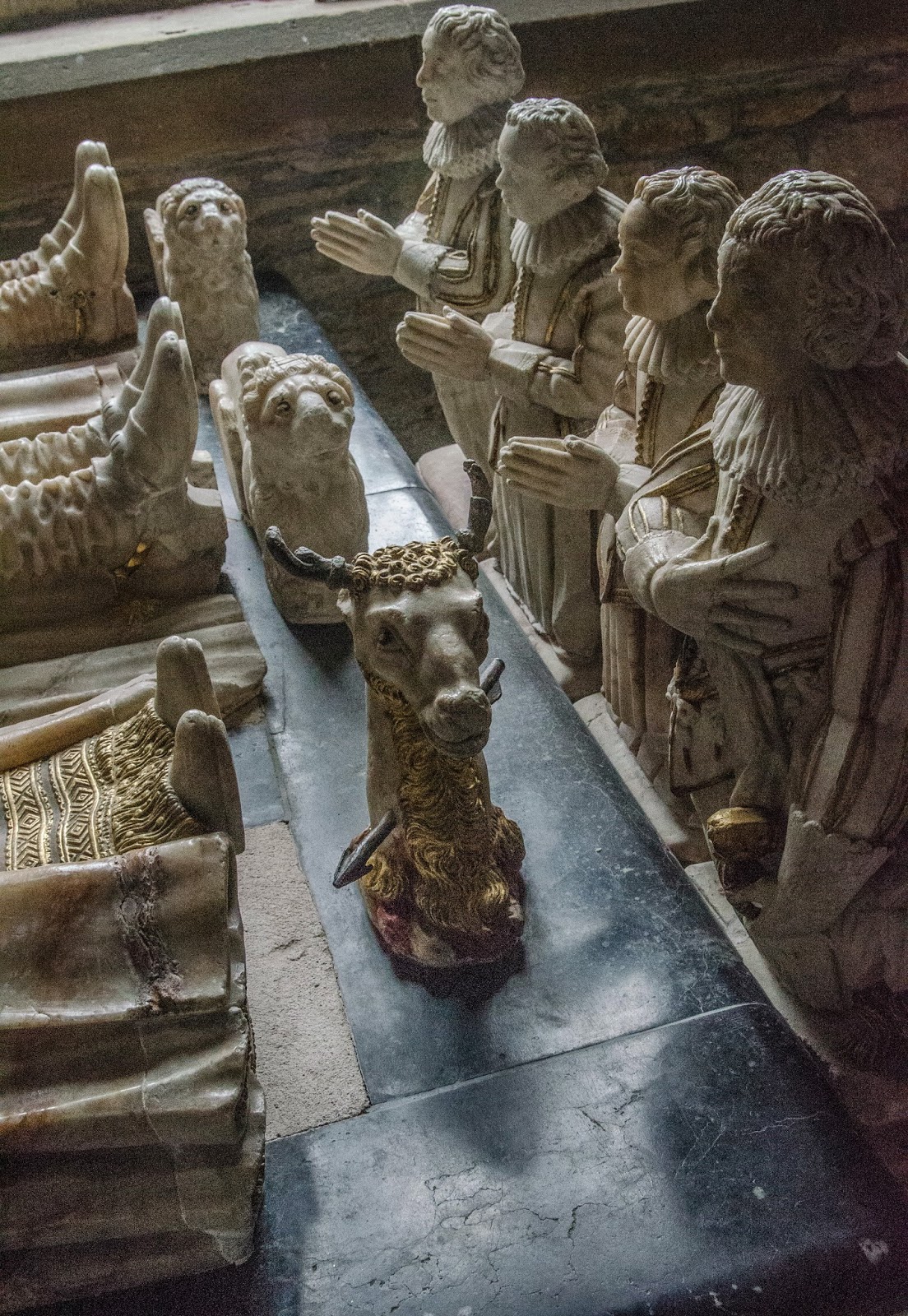
In St Mary's Church, you can't fail to see and wonder at two extraordinary tombs. On one, dating from c1700, the first Earl of Coventry lounges nonchalantly in full wig, one hand reaching out to pick up his coronet. The other - 25 years, but what seems like a whole world earlier - depicts members of the Savage family. Three lie as if asleep, the lady holding her baby daughter; while four other children kneel attentively at their feet. And between them, the head of a stag, with golden locks and one remaining but wondrous ear: its neck is pierced with an arrow. Savage culture once more.

Tuesday, 14 January 2014

King...?


This morning, I went to Cineworld to pick up the tickets I'd ordered online for a National Theatre live relay a while ahead. My dialogue with the young woman (early 20s) on the till went as follows:

YWET (looking at screen after my credit card had been inserted): There you go. "King ..." [pause]
Me: "... Lear?"
YWET: That'll be it.
Me: It's by Shakespeare.
YWET: Shakespeare?
Me: Didn't you do him at school?
YWET: That was ages ago. I can't remember.
Me: Which school did you go to?
YWET: Cleeve Comprehensive. I think it's got better since I was there.

Earlier, we had a visit from our friendly neighbourhood piano tuner, who admired our roses, still flowering on both sides of the front door: he might suit the part of Lear, don't you think? Though in view of his back problems, he wouldn't want to be lifting even a featherweight Cordelia.

Tuesday, 17 December 2013

Don't get me started on...


...people who include pets as "signatories" on their Christmas cards. The Season of Goodwill is stressed and strained enough as it is without extra provocation.

The ox and ass know their place in a Nativity scene, but a pony in Verdi's Falstaff? Well, at the outset of Act III, one puts in an appearance in Robert Carsen's syndicated production. It was relayed from The Met. to us amongst others - not that many, surprisingly - in our local Cineworld on Saturday evening. A riotously enjoyable evening it was too, discounting a few excesses (in addition to the pony): these so easily take attention away from a score that describes the action more than sufficiently. So, the wonderful orchestral accompaniment to "Mondo ladro" etc. was lost by my efforts to discern where Falstaff had ended up when he should have been "seated on a bench beside the door of the Garter Inn" (according to the stage directions).

As suggested in the interval discussion, Falstaff is a giant standing on the shoulders of others - Figaro and Meistersinger, but also Rosenkavalier. And something of the humanity, the stillness of a very great work needs bringing out, that was just a little lacking on Saturday. Nevertheless, for the first time in a while at these relays, I felt an urge to clap at the end.

This made me reflect again on a weird genre: the audience in New York is enjoying a live performance, but though we are watching it real-time, we might as well not be. It could be the Oscars on telly at home. I guess that's why I prefer the relative anonymity of Screen 4 (possibly Cineworld's largest auditorium) to the chi-chi of the more exclusive Screening Rooms downstairs. There you are in a full house, waited on with wine and nibbles while you wallow in leather seating alongside other regulars.

I discussed this over wine and (somewhat more than) nibbles with Robert Padgett, Chairman of the Cheltenham Opera Society, at lunchtime on Sunday. What was the effect of all these relays, I wondered, upon the audience for the actual performances (in New York, London, Glyndebourne, Stratford etc.); and upon the audience for less prestigious productions in the same towns/cities as had the relays?

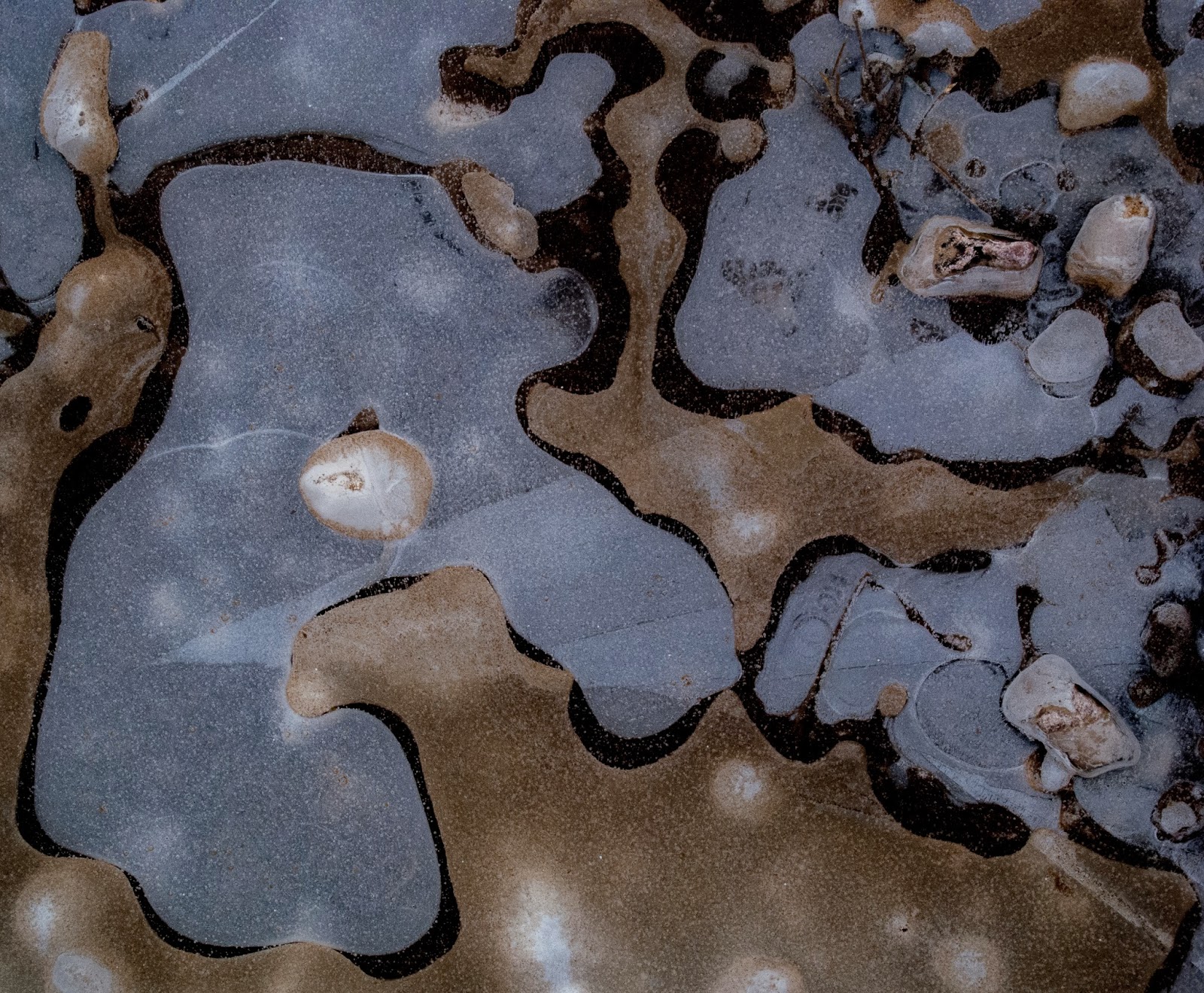
Not much photography lately: so here instead is an image taken when out walking on an icy lane this time last year - it was a good few degrees colder then.


Thursday, 14 November 2013

"From Chaucer to Chesterton"


I have mentioned All Hallows before, in connection with Roger Bevan, who taught us music there. Whilst I was at Ampleforth earlier this week, I leafed through Fr. Edward Corbould's copy of Christopher Bird's excellent book, The Cherry Jumpers, which looks back over 75 years since All Hallows started. One of the book's highlights (for me) was a piece Fr. Edward himself wrote detailing the headmaster, Francis Dix's sadistic teaching methods. It brought back vividly being threatened with a beating if I couldn't remember my Catechism answers correctly.

Interestingly, Bird's book doesn't quote from Auberon Waugh's autobiography, Will this do?: that lists other All Hallows horrors, though I don't remember what they were exactly: it's a while since I read it.

This photograph portrays some of those in the All Hallows Christmas 1954 entertainment. So far as my memory serves, with the parts played, they were as follows. From the left, back row: M. Bartlett (Mrs. Squeers); me (Flute the bellows-mender, playing Thisbe); David Russell (Richard II); Lewin Bowring (Guiseppe), Terence Bantock (The Duke of Plaza Toro) and Nicholas Fitzgerald (The Duchess – all from The Gondoliers); Roger Duncan (Macbeth); Gavin Poyntz-Wright (Lady Macbeth); Erik Pearse (Casilda, from The Gondoliers); Kit Barrington (Sir Oliver Surface) and Finn Fetherstonhaugh (Careless – both from The School for Scandal); Peter Pearson [he died soon after leaving Ampleforth] (a gentleman, in Get up and bar the door). In the front row: Martin Finn (Bottom the Weaver); Charles Atthill [now living in the US] (a Pope poem); P. Downey (Moses, The School for Scandal); John McEwen [Art critic] (Koko, from The Mikado); Peter Young (a Pope poem); Anthony Gilroy (Charles Surface, The School for Scandal); ?; Christopher Fletcher (Marco, from The Gondoliers); Peter Prideaux-Brune (Noah, the Chester Miracle Play); ?; and Gerald Towell [Towell and Scott] (Nicholas Nickleby).

I am indebted to the All Hallows Chronicle, 1954-56 for the details of this weirdly eclectic show. The Chronicle records even the most mundane day-to-day events in the life of the school in loving detail, an amazing legacy - no doubt created by Dix himself or possibly his wife Evelyn.

I've now learnt that Fr Edward told the book's author - too late for the book - of when he was teaching briefly at All Hallows having just left Ampleforth (we played him up no end): he remembers posting his application to join the Ampleforth novitiate in the letter-box alongside the old chapel of St James on the back lane adjoining Scouts' Wood, and thinking, "Well, there's my future sorted out until I die."

Going back to that entertainment, it's strange how things from so long ago come sharply back to mind. David Russell's Richard II excerpt was all about "graves and worms and epitaphs." And it put me off Richard II for years. In fact, until last night, when we watched the RSC live relay at our Cineworld. Magnificent!

I note that the first time I saw the play right through was with David Warner as the king in 1964; then Ian McKellen (1969) and Ian Richardson (1973) - all at the RSC. In that last production, by John Barton, David Suchet played a messenger.

Saturday, 9 November 2013

The almost true


I took this photograph 21 years ago at the official opening of Glenfall House, by the short-lived Bishop Peter of Gloucester: Sister Frideswide was one of the Anglican sisters who had occupied the house as their convent prior to the Diocese taking it over. Here she is enjoying a dish of strawberries and cream.

We saw "Philomena" this evening, the film based on Martin Sixsmith's book, "The Lost Child of Philomena Lee", about the forcible separation of a mother and child by the (Catholic) nuns of an Irish convent during the 1950s, and the subsequent attempts of the mother and child to contact one another. It's magic to watch. But it makes three contested points, without which it would undoubtedly have less impact.

First, it alleges the nuns willfully destroyed records that would have helped mothers and children to become reunited. Secondly, it says the nuns received payment from those adopting children. On both counts, the Order of nuns has issued a vehement denial.

And thirdly it portrays one of the nuns fiercely condemning the eponymous heroine for giving into her "carnal" desires - the nun in question having died almost a decade before the confrontation in question could have taken place.

It's ironic that the man behind the film (and brilliant in it) is Steve Coogan, by his own admission "forced to fight for the truth" on behalf of phone-hacking victims.


Friday, 8 November 2013

The Habit of Smart (phone users)


Five old friends came to lunch yesterday, and we talked about death, illness and travel, as one does. Caroline's bread and butter pudding was a triumph. I'm stuck for a segue to the scaffolders' visit today, to complete their spider's web, now surrounding most of the house at prodigious expense. And to the next item also.

"The Habit of Art" by Alan Bennett was relayed live from the National Theatre to cinemas three years ago, but I guess we were away. So we took the opportunity to view the recording they showed at Cineworld last night, part of the 50th birthday celebrations.

What a great play! And how did Bennett get the initial idea? Better than any Pirandello. There was one snag: Auden or Britten being strangers to me, I was perfectly happy to see them played by non-lookalikes; but it was different with Humphrey Carpenter, whom I had known quite well from his period directing our literary festival. Adrian Scarborough is nothing like him. This however was only a minor blip to set against some excellent acting, especially from Frances de la Tour.

Another snag arose in the form of a neighbour with her smartphone screen lit up. My request that it be turned off elicited a fusilade of invective, which was renewed in the interval. Yes, OK. I suppose I should be more tolerant in this day and age, but...


Monday, 4 November 2013

Another chapter closed


It's a relief when you go to an opera you don't know and realise at the final curtain that you need never see it again. Not that we didn't enjoy Les Vêpres Siciliennes, relayed from Covent Garden this evening. It has some good tunes, and opera doesn't come much grander. Though the programme strangely didn't mention his name, the excellent director Stefan Herheim spared no thought, and his paymasters no expense: the updating from 13th to mid-19th Century was an ingenious solution to what's pretty much an old war horse. It could be dire done straight.

During the intervals we were treated to tweets from cinema audiences around the world: someone from Ulster "wished we were there at the Royal Opera House": Caroline and I begged to differ. We felt far better off sitting in acres of space in our local Cineworld, enjoying our picnic topped off with a Ben and Jerry's ice cream.

And I reached the final chapter of "Still in the Game" last night. Charlotte had lent me her copy of Antony Hornyold's book when we met him at lunch with them last month. I much enjoyed its mixture of autobiography, history, adventure and reflection. Antony's own photographs are accompanied by good maps and some judiciously chosen archive material. Biggles was an earlier generation, but there are echoes in this self-portrayal of a brave and modest man, still very much with us. When's the next one coming out, Antony?

Friday, 1 November 2013

Richard II


"In a theatre, the eyes of men, after a well-graced actor leaves the stage, are idly bent on him that enters next," says York in Richard II. Currently, however, eyes (not only of men) are far from idly bent on David Tennant's performance as the King: we have tickets for the live relay in a fortnight, the first such from the Royal Shakespeare Theatre. There are queues for returns at the box office, and that will no doubt also be the case at Cineworld.

On Radio 4's Today programme, Maroussia Frank and David have just been talking to Rebecca Jones about the large ring David is wearing as Richard. Maroussia had inherited it from her husband Ian Richardson, who wore it in the iconic 1974 John Barton production, where he alternated with Richard Pasco in the roles of king and usurper: she felt it appropriate that a second Scottish RSC "Richard" should have it, especially - no doubt - bearing in mind that Ian's ashes are interred beneath that very stage on which David Tennant ("son" of Richardson, as it were) has next entered.

As a car-less tour guide at Charlecote Park in the early Summer of 1962, I made it my business to be especially nice to the last party I was taking round in case I could cadge a lift from one of them, back to Stratford. From there, it was usually easy to hitchhike home. One sunny afternoon, some actors were in this final posse, and I ended up with one of them in his Austin A30.

From a stage photograph I spied in the glove compartment, I realised it was Ian Richardson: though I had seen him several times in plays at Stratford, I would hardly have recognised him. "That was a bit of a matinée performance you gave us, I thought." He spoke in a soft, Scottish accent, quite different from his evil-sounding Don John or high-pitched Oberon. ("I had great difficulty persuading Peter Hall that I was right for this part," he told me: Titania was Judi Dench, Helena, Diana Rigg, etc. etc.)

I had asked for a lift to Stratford, but having explained that I lived at Arrow, Ian offered to take me the extra eight miles home. "Would you like to come in?" my father asked him, when we arrived. "Why not?" he replied. After two gins, my parents apologised, "but we are all now due to go for a drink up at Oversley Castle... perhaps you would like to come too?" "Why, yes," was the eager response, and so it was that we had the pleasure of Ian's company for the evening: as it progressed, so his tongue loosened.

I went back stage a few times after seeing him perform subsequently, the final occasion - shortly before his too early death - being after a reading of Shakespeare's Sonnets in our Town Hall. Never, of course, did I quite manage to recapture the easy atmosphere of that Summer evening.

My photograph was taken in Bristol Cathedral on Monday: there are a number of fragments of mediaeval glass preserved there. "Within the hollow crown, that rounds the mortal temples of a king, keeps Death his court and there the antic sits, scoffing his state and grinning at his pomp." One might almost suppose that Shakespeare wrote these lines having visited Bristol and seen this curious image.


Wednesday, 20 February 2013

2000 trees?


We have just returned from our friendly multiplex cinema, where we went to see Eugene Onegin beamed from the Royal Opera House. Since seeing Ileana Cotrubas in the Peter Hall production at Covent Garden (twice) and Elisabeth Söderström in the Glyndebourne Prom - all more than 40 years ago - this has been one of my favourite operas.

Last night's relay was one of the best such we have seen, I think. A thoroughly original interpretaion - dancers in the main parts as well as the singing actors - excellent singing, and the orchestra in tiptop form! My only cavil was with the unchanging set, which doesn't do at all for the key duel scene.

Though we lived barely four miles North of Withington for many years, I had never - before this misty morning - walked from that village to Foxcote. My photograph is of Upcote Farm, the first building you encounter after leaving Withington. The farmhouse faces South and is surrounded by a large stone barn and other outbuildings. A fountain was playing in the pond - altogether rather idyllic. Not such a peaceful place, however, later this year, when the seventh annual 2000trees festival takes place there.

Why "2000trees"? I wondered; but then we soon walked on into and through Vestey territory (Foxcote), in which trees have altogether possibly been planted by the thousand in recent years.

Friday, 18 January 2013

Winter at last


The snow lies thick now, and it's due to last for weeks! So, thank goodness nobody is planning going far this weekend - at least now that Agnes brought forward her trip to Oxford and we have cancelled our book group meeting in Worcester tomorrow. I have had sinusitis all week, so today was the first day I felt like putting my nose outside for any length of time - to walk along and collect a prescription. I must have been feeling below par to skip going to the National Theatre's Cineworld relay of "The Magistrate" last night: I was looking forward to it. Instead, we have Ida to entertain us.

Saturday, 5 January 2013

War horse


Les Troyens is on this evening, relayed from the New York Met. Caroline and I went along to our local cinema at 5 o'clock, plus picnic, ready for the five-hour big screen session; but by mutual agreement we came away at the first interval. After eating the picnic round our kitchen table, I find I'm much happier listening to Berlioz in the warmth of my study.

In the 'Sixties, I was an avid fan of this composer: Benvenuto Cellini with Nicolai Gedda was one of my earliest experiences of opera at Covent Garden; and three of us drove specially to Edinburgh in May 1969 to hear Janet Baker sing Dido in Scottish Opera's Trojans. This evening, though, in Cineworld I was bored. Was it the production, the singing or the music? Perhaps a combination of all three.

The ghost of Hector's appearance in a puff of pantomime smoke, stock still and dressed in white on top of a cave, with Aeneas kneeling below, brought the Grotto at Lourdes awkwardly to mind. Deborah Voigt as usual seemed unable to stop smirking, unfortunate when you're playing Cassandra.

Yesterday, we came to the end of the Radio 3's relay of the Ring Cycle in 10 instalments (a recording of the Covent Garden production last Autumn). As then, I listened to pretty well every bar; and that probably explained why tonight's rumpty-tum Berlioz left me squirming on my cinema seat.