Saturday, 29 January 2011

Forgiveness


Striking images of people who have become reconciled with those harming them featured in an exhibition at the University of Gloucestershire this week. Entitled The F-Word: Images of Forgiveness, it's the brainchild of journalist Marina Cantacuzino and photographer Brian Moody: they travelled across four continents to collect stories of people whose lives had been shattered by violence, tragedy and injustice - and who had chosen to take the challenging and often painful journey towards forgiveness. Huddled in the midst of the tableaux - as if ganged up against - were the University's three rather warlike figures sculpted by Lynn Chadwick.

The timing of this exhibition's local visit fits well with the end of the long-running inquest into the July 2005 London bombings, which has brought so many brave people's testimony to our attention. That too may be a step in the direction of forgiveness.

Friday, 28 January 2011

Cricket memorabilia


Sorting through some old photographs a few days ago, I came across one of my grandfather's cricket team, Sutton Coldfield. I Googled the club, which is still flourishing, and, having just bought a new scanner, I was able to send a copy to them. Now they say they are interested in anything else from that era, so I have put together an on-line collection. It includes this rather blurred image of C.O. Gray and my grandfather (then 27) going out to open the batting for Sutton Coldfield v. Walsall, at the 1910 August Bank Holiday, a century ago. I particularly like the thatched pavilion in the background, which reminds me of J.M. Barrie's design of the same vintage which still graces the Stanway ground.

Thursday, 27 January 2011

140 years of history


Day 4 of our house being overrun by plumbers is coming to an end. The temperature has dropped, as forecast, and we look like being without heating till next week!

They have removed the hot water cylinder from the airing cupboard in one of our top floor bedrooms. Behind where it stood, you can see an old bell mechanism: no doubt this originally was the servant's quarter.

We have also uncovered a patch of (Victorian?) wallpaper, with a rather interesting musical motif. But alas no forgotten stash of jewellery has materialised from underneath the floorboards.

Wednesday, 26 January 2011

Wormington - Sapperton gas pipeline


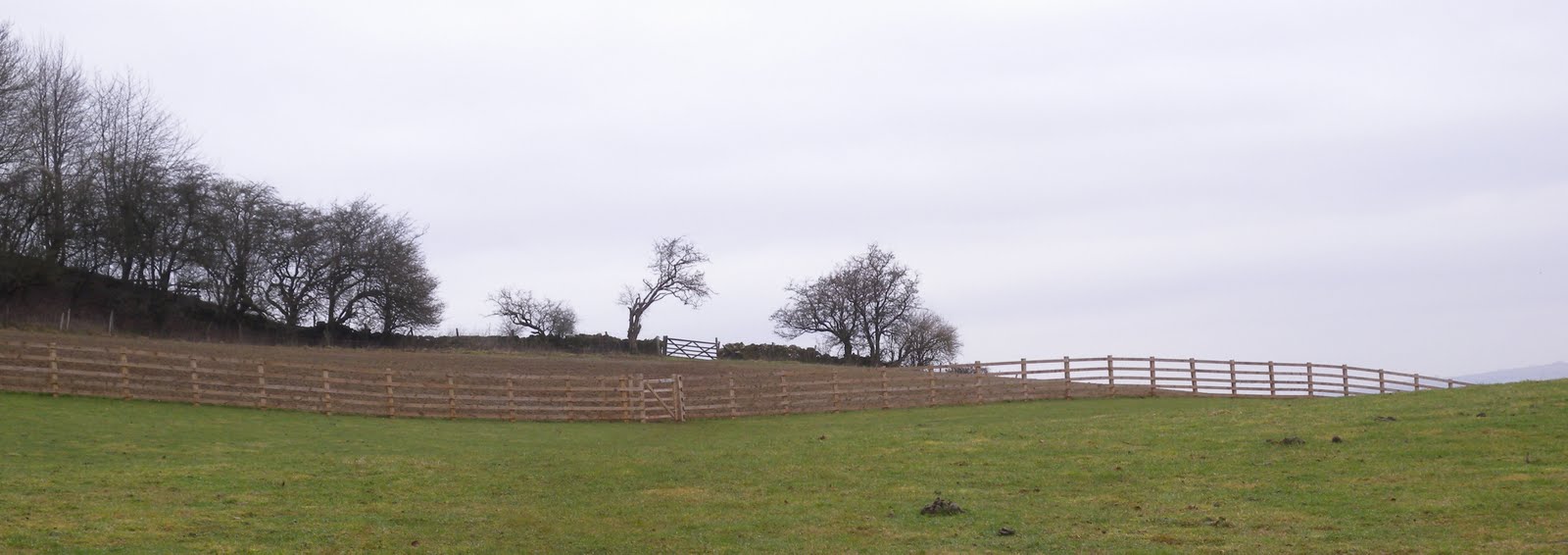
My first photograph of this scene near Farmcote was taken on a Winter walk from Stow to Winchcombe a couple of years ago. Today I went in the other direction from Winchcombe, but only so far as Guiting Power.

In the meantime, the massive operation to lay 28 miles of controversial gas pipeline through the middle of Gloucestershire has been undertaken. Despite National Grid's claim that the pipe, laid between Wormington near Broadway, and Sapperton near Cirencester, was essential to cope with growing demand, countryside groups were apprehensive about long-term damage to a sensitive landscape.

An extensive hub for the works - as big as a hamlet - was created more or less overnight just off the A40, not far from the Andoversford traffic lights. Driving past today, however, I saw no sign of it: without close observation, it would be hard to know it had ever been there. And the same goes for the pipeline near Farmcote, apart from a smart new wooden fence.

Tuesday, 25 January 2011

Integral links


I pity Chris and Mark, up on our roof in the rain today. They are fixing the Genersys panels, which should enable us to meet 70% of our hot water needs from sunlight. Even on a day like today, the dial would show some return, we are assured. I asked about maintenance, and there is none - further, the life expectancy is 35 years (which should see us out).

I suppose it's worth it, not just financially, but because it's a small step towards a new, low-carbon future. John Beddington, the chief government scientist, was talking this morning about the impending global food crisis, in the light of the latest Foresight project Global Food and Farming Futures report: half the world is even now being failed by the food system, he said. "We have to think very seriously about taking together climate change, food, water, energy: they are integrally linked."

Monday, 24 January 2011

Solar thermal


Our drive has been full of vehicles today. Last Autumn, we were approached - who hasn't been? - about putting panels on the roof, and it seemed the right time. After much toing and froing, we decided against the initial suggestion, a ten-unit system of photovoltaic cells. The roof available is 40 degrees off South and our two large chimneys add a deal of shade to the area. So, we are foregoing the attractive 41.3p per unit on offer from the government at present as an incentive to house-owners who opt for PV.

Instead, we asked about solar thermal, to reduce the gas and/or electricity needed to warm our water. We found that it too came with a sweetener - the renewable heat incentive: some £300 a year for 20 years. So, that is what we are now having installed - but of course it doesn't end there. Further questions and answers have led us to agree that our ancient boiler - long since condemned by British Gas - should be replaced, along with most of our rusting radiators. Altogether, a very expensive business.

We are just thankful that the temperature are at this moment above freezing, though this does not seem set to continue later in the week: doors are continually left open by plumbers who - whilst their selling point may be carbon efficiency - were themselves clearly born in a barn.

Tuesday, 18 January 2011

Heart and Soul


James Naughtie and Boris Johnson discussed where to build new airport capacity this morning, with not a mention of climate change. It's this dislocation between business as usual and long-term realities that so distresses the environmentally-minded.

One network I find particularly helpful in coping with this is the CELprayer group. A passage, written by Henri Nouwen was recently posted here, as follows:

Building Inner Bridges

Prayer is the bridge between our conscious and unconscious
lives. Often there is a large abyss between our thoughts,
words, and actions, and the many images that emerge in our
daydreams and night dreams. To pray is to connect these two
sides of our lives by going to the place where God dwells.
Prayer is "soul work" because our souls are those sacred
centres where all is one and where God is with us in the
most intimate way.

Thus, we must pray without ceasing so that we can become
truly whole and holy.


This struck a chord with me following the initial gathering of the Transition Town Cheltenham Heart and Soul Group last Saturday: 13 of us turned up for what was an exhilarating meeting. Christians being, I would guess, in the minority, we have much to learn from those of another spirituality; and likewise much to share about our own tradition with those of different or no faith, but who are walking the same path as we are towards what we each know will be a very different future. (A mind map has now arrived with me, putting down some of our areas of concern.) Incidentally, Transition Town Cheltenham is the 349th official Transition initiative - and the 187th in the UK.

Along similar lines to our Heart and Soul discussions, I have recently admired this post by George Marshall, on the theme of the ingenious ways we avoid believing in climate change. (The videos are also available on YouTube.)

Friday, 14 January 2011

Fela


This joyous musical came to our local Cineworld last night - the fifth National Theatre relay we have caught. The colours, the energy, the dance, the singing, the rhythm, the anger and the passion came across vibrantly even for a mainly middle aged, middle class, WASPish audience in Cheltenham. I was a little jealous, though, that the audience in the Olivier Theatre were having a rather better time: there was not much dancing in the aisles in Screen 3. And they had a better view of the subtitles than did we.

Eldridge Cleaver, who crops up in the story (what there is of it), said that if you were not part of the solution, then you were part of the problem. Fela Kuti's solution was to galvanise an ever-increasing number of African people to grasp at their roots, in order to set themselves free. This provoked a violent (African) response at many points. It also involved a rejection of the Christian heritage in which Fela's father was brought up, and reinstating something altogether more in tune with Nigeria's history and culture: the most sinister - and effective - passage in Fela is towards the end, when he journeys to commune with his dead mother's spirit.

Of my great-great-great-great-grandfather, who lived from 1749 to 1824, Markus Rediker writes, "Few people in the eighteenth century were better equipped to capture the drama of the slave trade than was James Field Stanfield. He had made a slaving voyage [as a common sailor], and a gruesome one it was, from Liverpool to Benin [which borders Nigeria] and Jamaica and back during the years 1774-76, and he had lived for eight months at a slave-trading factory in the interior of the Slave Coast." Stanfield, an educated man, actor and writer, and father of the artist Clarkson Stanfield (named for the anti-slavery campaigner, Thomas Clarkson) decided to write candidly about the horrors of the slave trade, a chapter of Rediker's "The Slave Ship, a human history" (2007, Viking) being given over to his life story.

So, this was a liberating, but also a disturbing evening, a world removed from the Bootleg Beatles.

Thursday, 13 January 2011

Peace Sunday


For the first time in a number of years, there will be a special collection at our church this Sunday in aid of Pax Christi. I support this international Catholic organisation, which aims:

* by the witness of its members, inspired by the word of God and the Eucharist, and acting in accordance with the spirit of the Beatitudes and of Christ’s commandment to fight injustice, to forgive one’s enemies and love one’s neighbour

* in considering the problems of the world and the church, to study the Christian peace ideal and to find ways of realising this in the light of the Gospel and

* by appropriate initiatives to promote this ideal among all people and institutions.

In his message for this year’s Peace Sunday, the Pope says, “I ask all Catholics for their prayers and support for their brethren in the faith who are victims of violence and intolerance.” In particular, he mentions the Christians of Iraq, but he could equally have referred to those in Egypt, India and Pakistan who have been in the recent news. The Holy Father goes on: “It is painful to think that in some areas of the world it is impossible to profess one’s religion freely except at the risk of life and personal liberty. In other areas we see more subtle and sophisticated forms of prejudice and hostility towards believers and religious symbols.” Maybe each of us has experienced a degree of this prejudice and hostility in our own lives.

I would commend the Pax Christi prayer:

Thank you loving God
For the gift of life
For this wonderful world which we all share
For the joy of love and friendship
For the challenge of helping to build your kingdom.

Strengthen
My determination to work for a world of peace and justice
My conviction that, whatever our nationality or race, we are all global citizens, one in Christ
My courage to challenge the powerful with the values of the Gospel
My commitment to find nonviolent ways of resolving conflict - personal, local, national and international
My efforts to forgive injuries and to love those I find it hard to love.

Teach me
To share the gifts you have given me
To speak out for the victims of injustice who have no voice
To reject the violence which runs through much of our world today.

Holy Spirit of God
Renew my hope for a world free from the cruelty and evil of war so that we may all come to share in God's peace and justice. Amen

The image was from our 2004 stay with Caroline's cousins in Asturias. The sea there is very rough - perfect, I thought, for surfing, and I borrowed a board. But I hadn't reckoned with the force of the undertow: it carried me out, and I had to be rescued, with difficulty, by the Spanish Baywatch equivalent. It was the last afternoon the beach was being monitored in that way: God was with me. The following evening, I took this photograph of a calmer-looking sea, but one I was fearful to re-enter.

Thursday, 6 January 2011

The alternative to growth


Writing in today's Guardian, Deborah Orr draws our attention to the HSBC report, The World in 2050. It predicts that in 39 years time we (the UK) will be the sixth largest economy in the world, barely affected by the vast Eastward-moving structural adjustment in the global economy. I share Deborah's view that this is sheer fantasy, and commend her formulation of an alternative vision:

It involves the adoption of serious, sober, studious, self-improving and circumscribed lives that are quiet and careful, disciplined and thrifty, packed with work, mostly unpaid, highly reliant on "simple pleasures" for satisfaction and self-fulfilment, and held together by a small but tremendously reliable and highly decentralised state.

She concludes: There was a brief vogue for discussion about the adoption of such Quaker-like existences just as the crash came, but people very quickly realised that they didn't actually fancy it all that much, really. Instead, the hope is still to have it all, for ever, and in this the only real difference between the mainstream left and the mainstream right is how the fantasy gets dressed up. Happy 2050.

Tuesday, 4 January 2011

Dorset glass


Laurence Whistler engraved this window, one of a full set in the luminously light church of St Nicholas, Moreton, between Wareham and Dorchester. I paid a visit today, after staying last night with a second cousin in Swanage. (Thanks are due once again to Simon Jenkins for his invaluable "England's Thousand Best Churches".) The quality of the engraving is remarkable, and must be justly described as Whistler's masterpiece.

The subject matter is appropriate for today too, as I was on my way to Holy Trinity Catholic Church in Dorchester, to pay final respects (along with some hundreds of others) to our good friend Giles Gleadell: who would contest his claim to be the only member of Cheltenham (Racecourse) also to be a member of the Royal Cruising Club? It was the best send-off I've ever had the privilege of attending: Giles must be cooing quietly up there.

Wednesday, 22 December 2010

The Christmas story for the digital age


Letter boxes have still overflowed this year notwithstanding text and email's dominance of our normal communications flow. There's something satisfying about sending and receiving a card, however little may be written on it, and despite - perhaps because of - the expense and labour-intensiveness. I never cease to wonder at the variety of representations of the Christmas message that the postman brings: duplicates occur, but they are rare. My father used to hang cards up on sticky tape, and we played a game trying to spot which card image contained a certain unique feature.

This year, we have had a smattering of e-cards as in recent years past; but so far the best e-message has been forwarded by Thomas from Lisbon: as one might expect from him, both up-to-date and tongue-in-cheek.

Tuesday, 21 December 2010

Hallelujah


This is one of the gates of St Gregory's Church, here in Cheltenham town centre: I took it on Sunday night. We were due to go again last night for the carol concert, but it was called off. As compensation, I discovered this joyous video: it has been viewed nearly 25 million times already, but some of you (like me) may have missed it.

Monday, 20 December 2010

"The Nativity"


We watched the first episode of BBC1's "The Nativity" this evening. Very good it was too. A perceptive review has already appeared here.

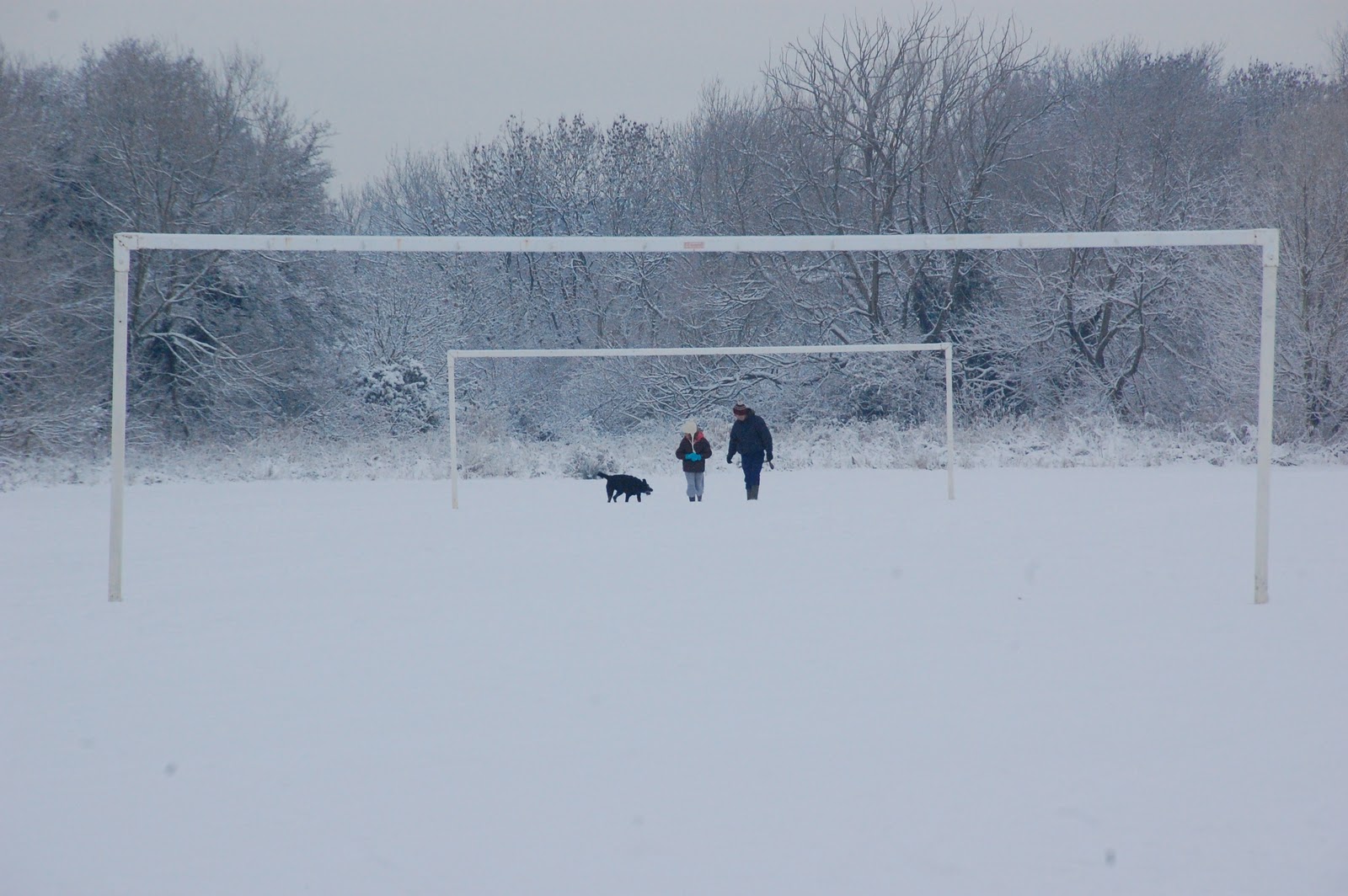
What I particularly liked about it was the depiction of the holy family as made up of very ordinary people, rather like those out walking their dog on our local playing field yesterday. (Not sure the holy family would have kept a dog, mind you.) We shall try and catch the remaining three episodes - which is not so hard now that we are house-bound because of the weather: we've just been coping with a burst pipe.

Sunday, 19 December 2010

paper white


Caroline was out early this morning, sweeping our drive after our first really serious fall of snow this Winter: we have got off lightly up till now. I was quite surprised that the newspapers had got through, as the roads are treacherous. Gritters don't seem to work on a Sunday, I concluded as I slithered by foot to mass this evening. I sneaked in a prayer for a better performance by our batsmen after the Perth debacle.

Friday, 17 December 2010

Phoenix of Avon


My photograph, taken this afternoon from the old bridge across the Avon at Stratford, shows the remade Royal Shakespeare Theatre, which opens in earnest next February. By the waterside, the line of the Scott building has been restored, with the café resited in the stalls bar, and a wide outdoor terrace opened up in place of the café. The dressing-room block has been refaced: in 1955, stagestruck, I saw Vivien Leigh on one of those little balconies during an interval of Twelfth Night: she was playing opposite her husband Laurence Olivier. The restaurant - excellent food and of course views - is now in the glass-faced box overlooking both the river and former theatre car park: it paid to be on good terms with Victor there - as with Leslie Mitchell in the box office. The tower is of course totally new, and I think rather regrettable. I would say the same for the octagonal crown over the refashioned auditorium.

Inside, there is plenty to admire. The layout is on the same lines as that of the Swan next door, but altogether less claustrophobic. The seats look really comfortable, and of course none is any distance from the stage - as in the Courtyard. I can't wait to hear what the sound is like.

One major disappointment: try as I might, I can find nothing in the literature to indicate what steps have been taken to make the refurbished RST energy-efficient. Heating the cavernous new shop/foyer area seems likely to cost a bomb.

Thursday, 16 December 2010

Grandparenting


Verdict on last night's predictions:

* the cricket - better than I expected (Day 1): a long way to go though!

* the weather - as bad: not much fun bicycling back from Cheltenham Station in the snow this evening.

I had taken the bike on the train to Bristol, for a visit to watch grandson Laurie in a starring role as a gingerbread man - in his playgroup's Christmas show. In fact, all 31 of the little darlings had starring roles, but naturally Laurie was the only one who really mattered. (Photography generally encouraged, but results not to be posted on the internet, I was advised.) I wondered if any of them would make it onto whatever turns out to be the 2025 equivalent of The X Factor.

It is always nostalgic, coming to Temple Meads Station, and reliving the misery of the beginning of each new school term in the early 50s.

Wednesday, 15 December 2010

Cricket and carols


Good friends invited us to their carol party this evening, which put us well into the mood for Christmas. Not many are privileged to sing together in an upstairs drawing-room accompanied by a chamber organ. We began with my favourite Advent hymn, O come, O come, Emmanuel, with five carols following on - just the right number, and played at a good lick. There's nothing worse than a dirgy pace where carols are concerned.

The snow is coming back, we are told, but at least we shall hear about warmer doings overnight, tuning in from Perth. (I have a hunch that all is not going to go according to - English - plan.) Meanwhile, the British Council have added an amazing historic film about cricket in post-War London to their website.

Tuesday, 14 December 2010

An Oscar at the RCE


Yesterday, I related unnecessary packaging to incipient climate chaos. Today, the RCE Severn Christmas Lecture by Michael Wadleigh related consumerism as a whole to unsustainable development by means of the simple equation:

H+P = -R

where H = the human population, P = manufactured products and R = resources. It's hardly an original thought, but he put it across well by means of excellent slides. They imagined our world was encapsulated in a space station with ten occupants - one of whom enjoyed half the available resources, the other nine sharing the rest. Result: of course, revolution.

What makes human beings happy? he asked. Products? No: nature, other human society and activities leading to fulfilment. Truth and finit-ism were his watchwords.

I commend Michael's presentation, called the Homo Sapiens report: he offers it free of charge to secondary schools and universities. And he'll bring along his Woodstock Oscar for a talking point!

Monday, 13 December 2010

Cancún


At this checkout at lunchtime, I was told I was the first person today to refuse a plastic bag for my purchases. Is there any wonder we can only just about keep the climate talks on the road?

Sunday, 12 December 2010

Sire


48 hours after Hamlet, I returned to our local Cineworld's Screen 3 for Don Carlo last evening: live relays from the Metropolitan Opera have begun again, praise the Lord. A couple of minor hiccoughs with the transmission served only to underline the miracle of modern science that enables us to sit in Cheltenham and watch what New Yorkers are experiencing in the theatre. To be able to bike 10 minutes down to the cinema and pick up a ticket at the door (and for only £10) seems to me incredible good fortune.

Both production and performances were outstanding. I forgot I had seen most of the principals in the same staging when televised from Covent Garden a year or so ago, but no matter when such excellence is on hand. Of the cast, Marina Poplavskaya again stood out for me, with her extraordinary legato and perfect looks for the part of Elisabeth de Valois.

Something else we now take for granted is subtitling. Not every word of the libretto is given us, but last night, with the King of Spain around, "Sire!" naturally recurred a good deal. And earlier in the day we had seen another famous sire. Makfi, winner of this year's 2,000 Guineas, resides in a stableyard beside the house where we were lucky enough to be invited to lunch yesterday: stud fee, £25,000.

Friday, 10 December 2010

Hamlet by the dozen


I collect Hamlets as others collect rare books. The bibliophile leaves many of his volumes unopened on the shelf: likewise, this Hamlet collector doesn't record the minutes his eyes have remained closed during a performance. (Kenneth Branagh took a long time doing his Dane, I recall, on a particularly stuffy evening at the RST in 1992...)

Alan Badel was my first Hamlet - 1956, Stratford. I remember him, but not much about Anthony Quayle and Glen Byam Shaw's production, the first of half a dozed (this is as I typed it - too good to correct) I saw in what we must now call the old Shakespeare Memorial Theatre: that meant something different to theatregoers in the 1950s, whose memories went back before the 1926 fire.

Ian Bannen, David Warner in long sudent scarf, Nicol Williamson with some machine gun delivery at The Round House, Alan Howard, Ian McKellen in 1971, Alex Jennings (1996), Simon Russell Beale (2001), and the great Russian film Hamlet with Innokenti Smoktunovsky: now the collection has an addition to it, following a visit to Cheltenham's Cineworld last night for the relay from the National Theatre. And Rory Kinnear's Hamlet goes to the top of my list.

Wednesday, 8 December 2010

Student unrest - in Cheltenham


"Hundreds of students are gathering in Cheltenham to stage a protest against a planned rise in tuition fees" - so promised the press release issued first thing this morning. The police turned out in force. Bus routes were diverted, and not just because of the snow.

The water froze before reaching the taps in my Oxford rooms in 1962. Surely students today are not put off from marching by a little cold? In a place where the annual GCHQ rallies used to witness thousands coming together, just a few tens ambled in after midday today - shepherded by as many (if not more) of the boys and girls in yellow jackets, their kettling skills unneeded. William IV looked down scornfully from his plinth.

Tuesday, 7 December 2010

Patsy Hendren


Half a century ago, I used to travel into Birmingham on the top deck of the Midland Red bus, to watch Warwickshire play cricket. I sat at the front alongside Mr. Austin, the Warwickshire scorer: he, his wife and daughter Joan lived near us in Alcester. I regarded him and indeed all the cricket establishment with awe.

After lunch, Chico, as people less in awe called him, would let me come and sit at the front of the score box - but only upon the arduous condition that I resisted the urge to clap. Chico knew of my propensity for collecting autographs, and one day when Middlesex were our visitors, suggested I might like to ask his fellow-scorer to sign my book. Who was this white-haired veteran, I wondered? The name in the book was clear: "E.H. Hendren". But it meant little to me, hardly surprising since he had made his Middlesex first team debut in 1907.

Today, we sleep-deprived cricket addicts are rejoicing in a famous victory at Adelaide, brought about through England scoring 620 for 5, their second-highest total in a test match in Australia. Even when rain threatens, the temperature there is up in the 30s: here, by contrast, we walk out into a white wonderland, where even the traffic lights are decorated with hoar-frost. Retreating to the fireside, I read of the occasion in 1928 when Jardine's men reached 636, with 251 from Hammond. The second highest scorer? E.H. Hendren.

Wednesday, 1 December 2010

David Fleming RIP


This afternoon, I was looking at this amongst other photographs I had taken during 2010, to select some for our usual kitchen calendar. As I did so, I thought to myself how short life is for some people - and that perhaps indeed it would be so for David. I can't imagine what gave me this idea, as that Michaelmas Day in Cornwall when I took this, just two months ago, he was in prime form - as cadaverous as ever, but enjoying a healthy if quirky diet, and no more stressed than usual about what might become his very own Casaubon delusion.

An hour later came the shocking news that David had indeed died at the weekend. What a friend we have all lost! Others have written more knowledgeably than could I about his originality of thought. You could see him as a curmudgeon if you opposed the invasion of Iraq; or the mad professor if you looked for a practical, straightforward answer to a question. He regularly won the family's competition for most unusual Christmas card. Sir Andrew Aguecheek sprang occasionally to mind, though David was nobody's fool - and never had money enough to match his generosity of spirit. Such a mixture of the extremes of conservatism and radicalism puzzled many, but beguiled our children, who will be heart-broken. And what other economic dictionary offers a definition of "quick" in the biblical sense?

The Iraq conflict re-erupted over supper in our kitchen on 8th October 2005 - between David and his good friend Jonathon Porritt. This photograph was taken a few glasses of wine later.